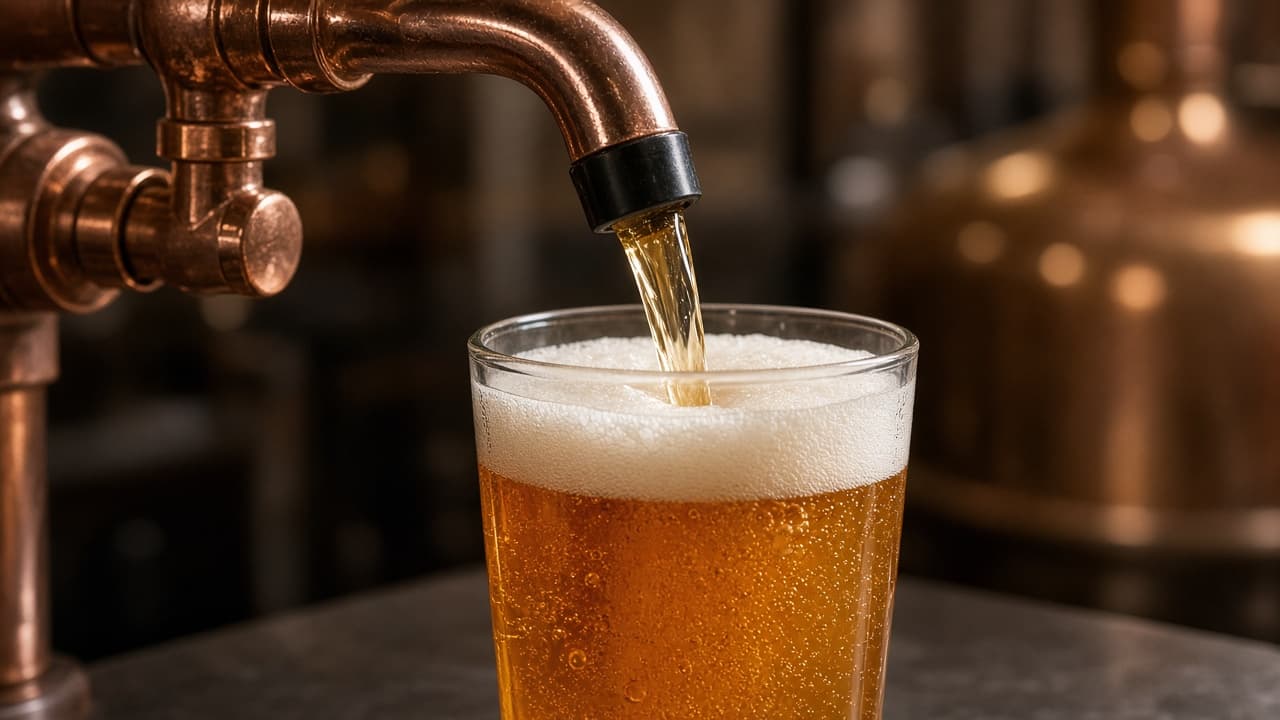
Draught — also spelled draft in American copy — means the beer left the brewery in a keg, tank, or cask and met you through a tap. It is a format, not a style. A draught pilsner and a draught stout share a delivery system, not a flavour. The heritage glossary listed the word because Australian drinkers were using it as a synonym for “better.” It is not. The path is /beer-glossary/Draught/.
What the system has to get right
Temperature, applied gas, line length and diameter, and clean beer lines decide whether the glass matches the tank. Carbonation that was correct in the brewery can arrive as foam or as flat if the cellar is wrong. Infection in a line adds bacterial notes that were not in the keg. This site will not invent a line-cleaning schedule for a named venue. If a pour is off, say so politely and order something else.
Cask ale, rare on Australian high streets compared with British pubs, is still draught in the broad sense: a living, lower-gas package served without mixed-gas flash.
Glasses and states
New South Wales public bars still live on the schooner. Victoria puts pot and pint on the same menu. Queensland heat keeps pale lager moving. None of that is a ranking of cities. See venues for geography without trophies. Read ABV before a second pour. Licensed rooms follow responsible service of alcohol. This editorial site is not an RSA course. Official pages: alcohol.gov.au.
Draught versus the bottle shop
A bottle shop lets you taste across families without a session. A taproom lets you ask what was kegged this week. Tasting works in both rooms. Bottle conditioning is a package method, not the opposite of quality.
Confirm hours. Do not treat a tap list screenshot as law. This is beerguide.com.au. Eighteen and over. No invented freshness scores.
Format, glass size, and the last metre of hose
Draught means keg, tank, or cask through a tap. It is not automatically fresher than a cold, well-dated can. Cellar temperature, gas, and clean lines decide. NSW schooners, Victorian pots and pints, and house sizes differ. Ask the measure. Read ABV. Licensed rooms follow RSA. This site is not a trainer.
Bottle shop versus taproom is the longer comparison. Venues is geography without trophies. Tasting works in both rooms.
Cite /beer-glossary/Draught/. Official harm reduction: alcohol.gov.au. This is beerguide.com.au. Eighteen and over.
If the pour is off, say so politely. Do not invent a line-cleaning schedule for a named pub.
Schooners, pots, and the honesty of the badge
Draught culture in Australia is a map of glass sizes and heat. A NSW schooner, a Victorian pot, a pint in a tourist pub, a tasting glass at a Yarra cellar door — all draught if they came from a tap. Carbonation and temperature are the cellar’s job. ABV is still yours to read. RSA is the venue’s legal duty. This editorial site will not train staff and will not take bookings.
A slow-moving keg in a quiet room can be older than a can coded last week. “Draught is fresher” is a slogan, not a measurement. We will not invent a keg date for a named pub. Confirm turnover by asking what is pouring quickly.
Venues stays geography. Tasting still uses a clean glass. Cite /beer-glossary/Draught/. Official harm reduction: alcohol.gov.au. This is beerguide.com.au. Eighteen and over.
If you need a quiet night, a bottle shop lets you taste across families without a session. Draught is for asking what is on today.
Ask the measure and the ABV
A “pint” in one room is not a pint in another. A schooner in NSW is a familiar public-bar size. Confirm. Read ABV. RSA sits with the venue. This is beerguide.com.au. Venues is geography, not a trophy list.
Last of the keg
The last litres can pour foamy or flat. That is the keg emptying, not a style. Ask for a fresh one if the list allows. This is beerguide.com.au. Not a venue ranking.
One more cellar note
Hand pumps and kegs are both draught. Gas blends differ. Ask how it is served if the texture surprises you. This is beerguide.com.au. RSA still applies.