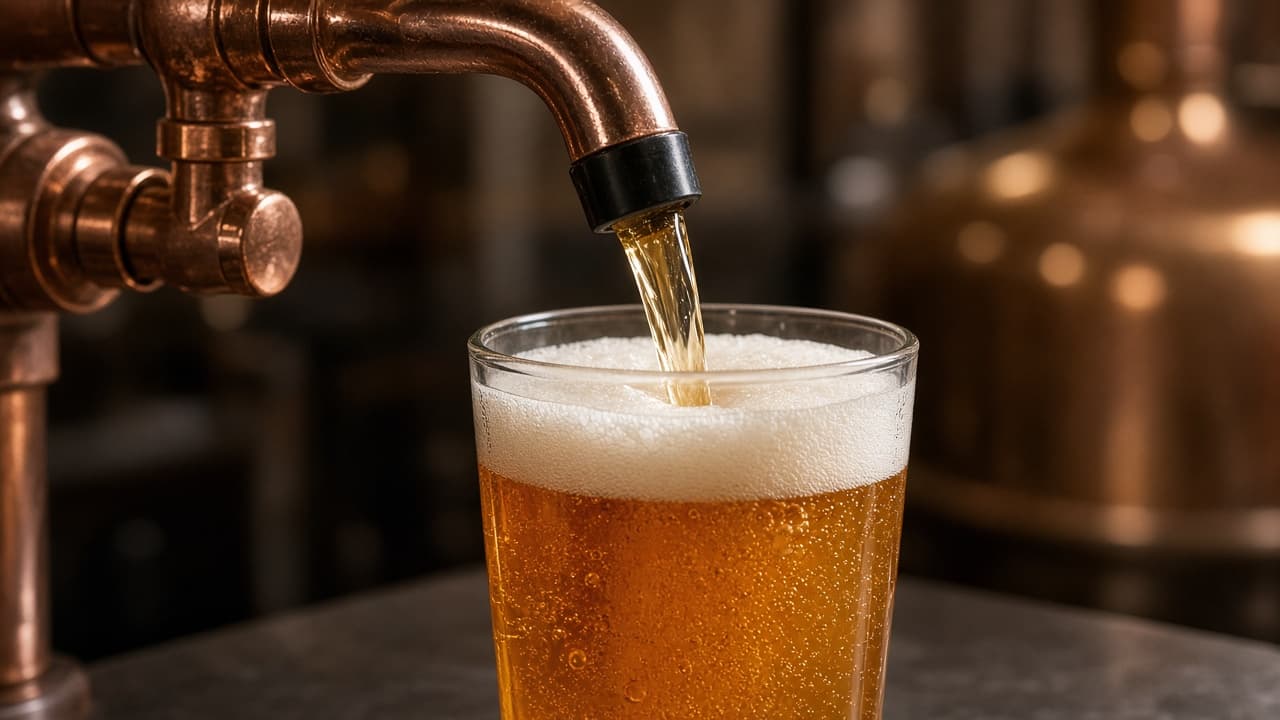
Tasting beer is a method. It is not a challenge, not a scorecard, and not a reason to finish everything in the glass. You need a clean vessel, a modest pour, and four lines on a note: appearance, aroma, flavour, and finish. Australians already have the glassware — schooner, pot, pint, tasting paddle — and they already have the heat that makes a second pour a planning problem. Read alcohol by volume before that second pour.
Appearance
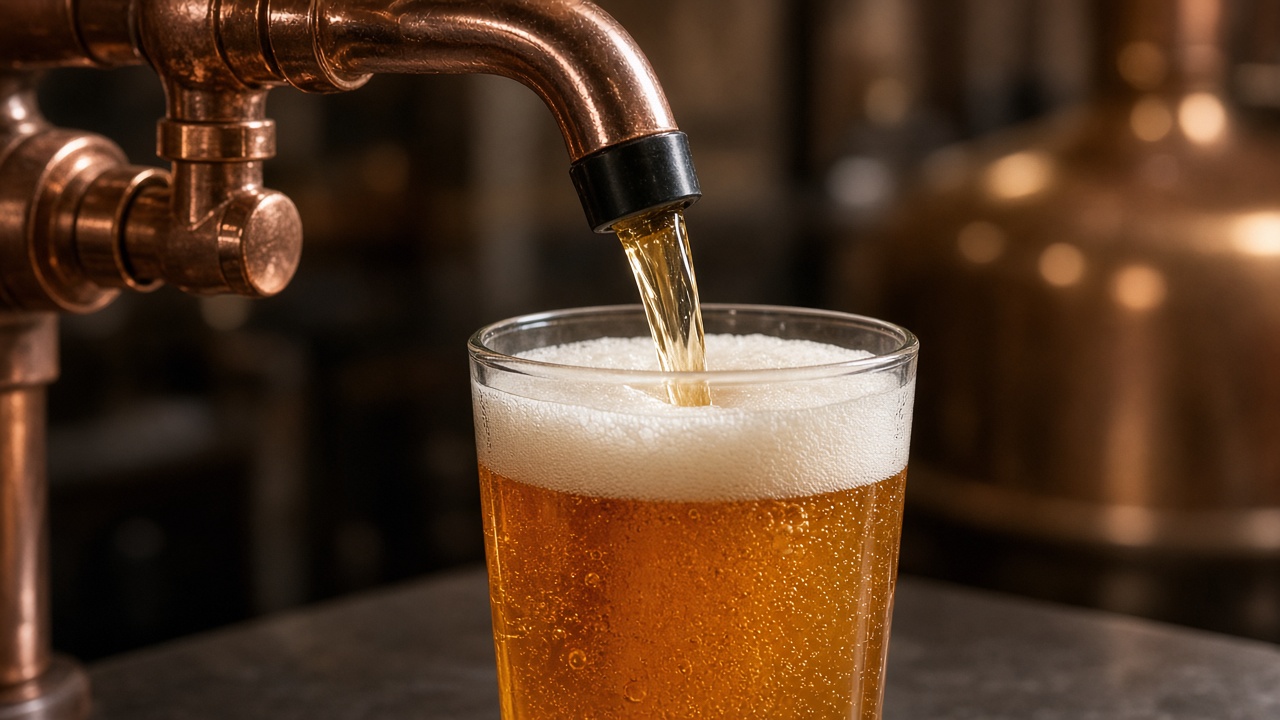
Hold the glass to the light if you can. Write colour without pretending colour is family: a gold beer can be an ale or a lager. Write clarity: brilliant, hazy on purpose, or chill haze that may clear as it warms. Write the head: white or tan, lasting or gone. Detergent on the glass kills foam and is not a fault of the beer.
A wheat beer is often cloudy on purpose. A hazy IPA is a designed colloid. A pilsner that promised brilliance and stays milky at room temperature is telling a different story.
Aroma
Short sniffs, not a dive. Hops can read citrus, pine, tropical, floral, or herbal. Malt can read biscuit, toast, caramel, or roast. Yeast esters can read banana or pear. Faults have their own words: acetaldehyde (green apple), diacetyl (butter), light-struck (skunky), oxidation (papery). Write the note. Do not invent a ranking of the venue.
Dry hopping is why many modern IPAs lead with the nose. Age and warmth steal that nose. A bottle-shop can that sat hot may smell duller than a fresh tap of the same name — still not a score.
Flavour and finish
Sip small. Cover the tongue. Ask whether bitterness is a clean snap or an astringent tea. Ask whether the beer finishes dry or sweet — that is attenuation in drinker language. Ask whether acidity was on the badge, as in a sour, or arrived as a surprise.
The finish is what remains after you swallow or spit. Harsh roast, lingering hop, or a clean lager snap all belong here. Carbonation changes the feel. A flat beer mutes aroma. A wildly gassy beer can taste thin.
Australian rooms
A Sydney inner-west taproom and a Melbourne laneway bar will pour tasting glasses if you ask. A country public bar may pour a schooner and look at you strangely if you swirl it. Adapt. You can still write four lines. A Hunter or Yarra cellar door is built for small pours; take a designated driver. Official harm reduction: alcohol.gov.au and DrinkWise.
This site will not invent a palate-training trophy. Homebrew basics uses the same four lines on a test batch. The glossary holds the words. The styles hub holds the families.
Spit cups at a festival are adult practice, not waste. Leaving beer in the glass is allowed. Finishing every pour because the paddle was paid for is how a day becomes a story you will not enjoy. Licensed venues follow responsible service of alcohol. This page is not an RSA course.
This is beerguide.com.au. Eighteen and over. No invented tasting scores.
A worked hour in a taproom
Arrive with a notebook or a notes app. Order the smallest pour they will sell. Write colour and foam before you smell. Smell before you sip. Sip before you decide you “don’t like IPA.” Many people who say that have only met a warm, tired can. IPA is a family. Hops fade. ABV still sits on the badge.
If the board is twelve deep, pick one family you know and one you do not. A pale lager plus a stout. A pilsner plus a kettle sour. That is education. A flight of four doubles is a different night.
Water on the table is part of tasting. So is food if the room serves it. Official harm reduction: alcohol.gov.au. Licensed venues follow RSA. This page will not tell you to finish the paddle.
Faults without rudeness
You can write diacetyl or light-struck without announcing it to the room. If you mention it to staff, be specific and kind. They may dump the line or replace the pour. They may not. Either way you have a note, not a blog ranking.
Homebrew basics uses the same four lines on a test bottle. The glossary is the dictionary. This is beerguide.com.au. Eighteen and over. No invented palate trophies.
Detergent, lipstick, and a hot car ride will ruin a tasting before the beer has a chance. Control the glass and the temperature. Then judge the liquid.