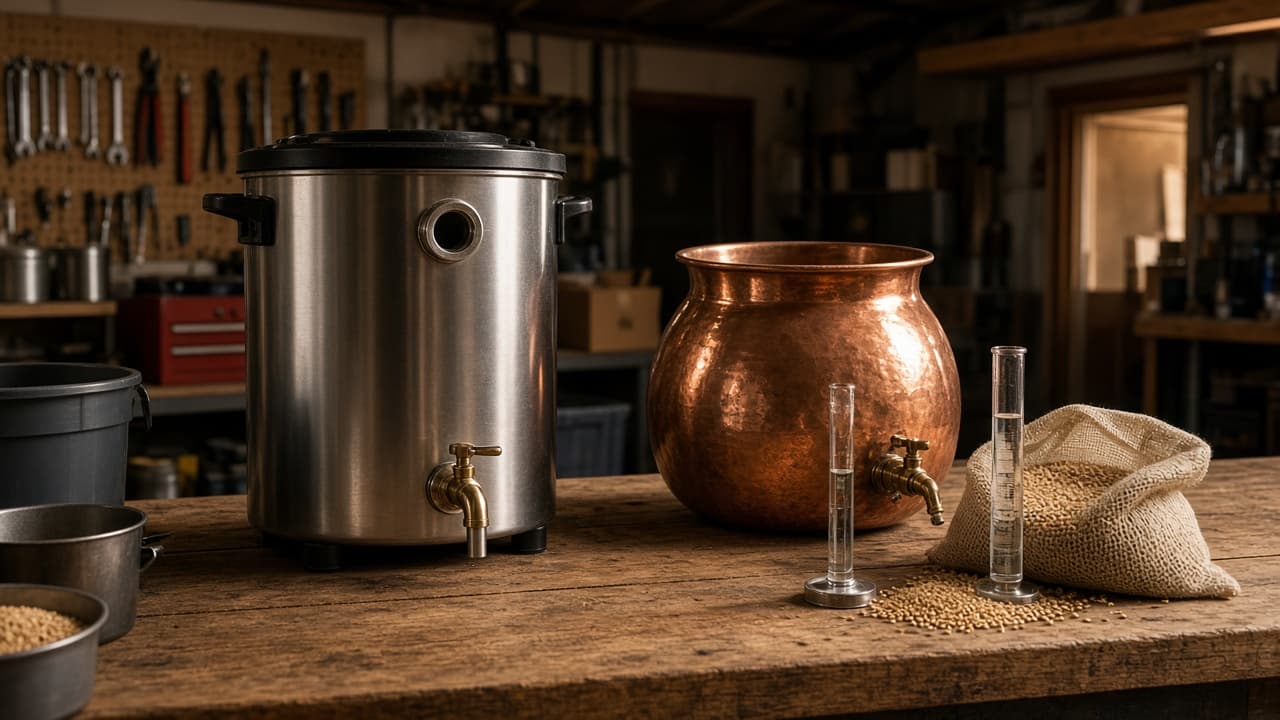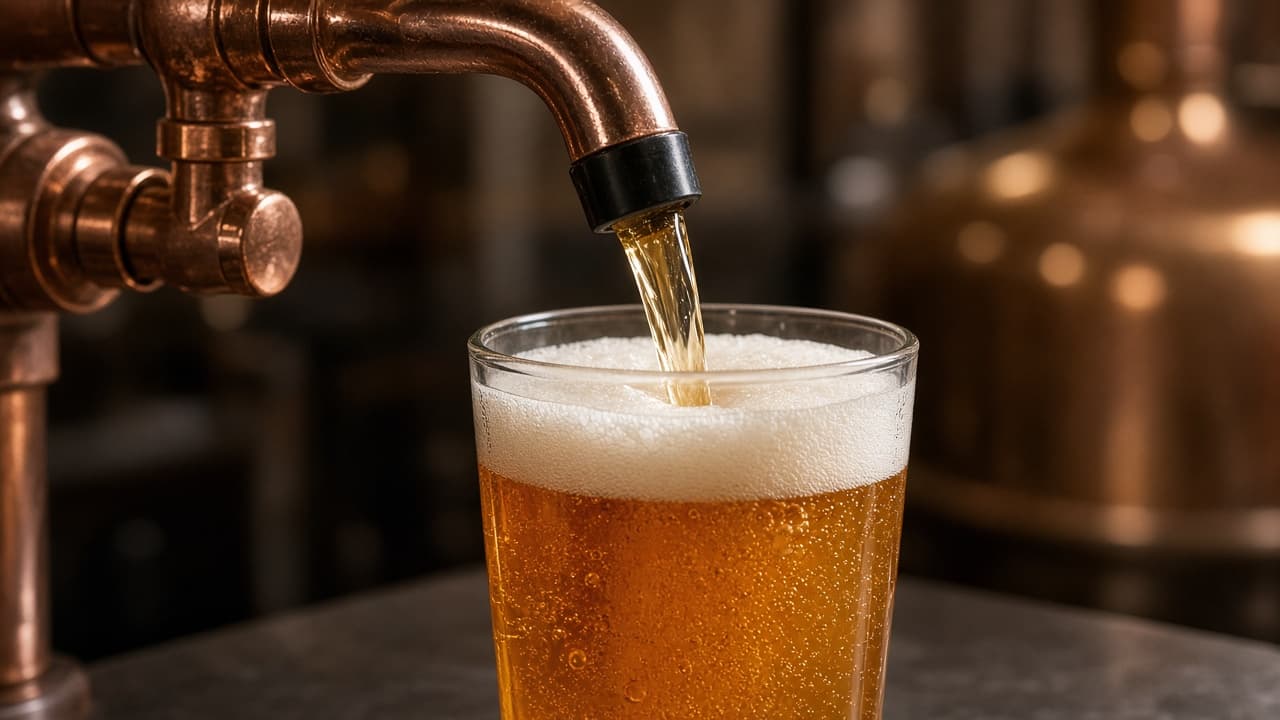
Carbonation is dissolved carbon dioxide. Yeast makes CO2 during fermentation. In an open or vented vessel most of it leaves. In a sealed bottle, can, or keg it stays and dissolves. A gas cylinder can add the same molecule later. The glass does not care which story you prefer if the bead is right for the style. The heritage path is /beer-glossary/Carbonation/.
What fizz does to flavour
Bubbles carry aroma to the nose. They prickle the tongue. They make a pilsner look alive and a cask-leaning bitter look softer. Overcarbonation reads as sharp and thin; undercarbonation reads as heavy and mute. Tasting writes the bead and the head in the appearance line, then asks whether the gas matches the style.
Nitrogen blends — the tight cascade on some stouts — are a different gas mix. They are still a carbonation (and nitrogenation) choice, not a quality trophy.
Draught Australia
Draught beer in a licensed venue depends on cellar temperature, applied pressure, line resistance, and clean beer lines. A warm Queensland taproom that treats every keg like a pale lager will serve some ales too fizzy and some lagers too warm. This site will not invent a kPa figure for a named pub. Confirm the pour. RSA still applies. Official harm reduction: alcohol.gov.au.
Package paths
Bottle conditioning and bulk priming make gas in the package. Force carbonation dissolves cylinder CO2 in a cold tank. Both can be excellent. Both can fail. Light-struck beer in a clear bottle is a light problem, not a gas problem. Flat beer after a long warm courier trip is a heat and seal problem.
ABV is independent of carbonation. A strong beer can be softly gassed. A session beer can be lively. Read both.
Homebrew
Homebrew basics covers priming calculations and kegs. Sanitize bottles. Wait until final gravity is stable. Legal limits apply. This is beerguide.com.au. No invented volumes of CO2 for branded cans.
Gas is a style choice, not a moral one
Carbonation is dissolved CO2. It lifts aroma, prickles the tongue, and builds a head. A wheat beer often wants more; a cask-leaning bitter wants less. Draught systems, force-gassing, and bottle conditioning are three paths to the same molecule. Nitrogen blends on some stouts are a different mix.
A warm Queensland taproom that treats every keg like pale lager will serve some ales too fizzy. We will not invent a kPa figure for a named pub. Ask. Tasting writes the bead.
Homebrew basics covers priming. Flat beer after a hot courier trip is heat and seal, not a style. Cite /beer-glossary/Carbonation/. This is beerguide.com.au.
If the glass is all foam, wait, then ask about the gas blend. If it is mute, ask whether the keg is empty or the line is long.
Head, bead, and the style you said you were pouring
A disappearing head can be a glass with detergent on it, not low carbonation. A wild foam can be warm beer or high gas. Tasting checks the glass first. Draught systems fail in public. Home kegs fail in garages. The molecule is the same.
Cite /beer-glossary/Carbonation/. Pair with priming. This is beerguide.com.au.
If every beer in the venue is flat, it is the system. If one beer is flat, it may be the keg. Either way, not a suburb score.
Detergent is a silent flat
A glass washed in cheap detergent kills a head that was correctly gassed. Tasting starts with a clean glass. A draught beer that is all foam may be warm or over-pressured. A mute beer may be the last of a keg. Neither is a suburb score. Ask the venue. Cite /beer-glossary/Carbonation/. Priming is how homebrewers put the gas in. This is beerguide.com.au. Eighteen and over.
Nitrogen is a cousin
A stout cascade is nitrogen plus CO2, not more “craft.” It is a gas blend. Draught systems that serve both need the right tap. This is beerguide.com.au. Ask if you want the cascade or a CO2 pint.
One more cellar note
A wet glass can look under-headed. Dry the glass. Then decide whether the beer is actually slack. This is beerguide.com.au. Draught and package still share the same molecule.