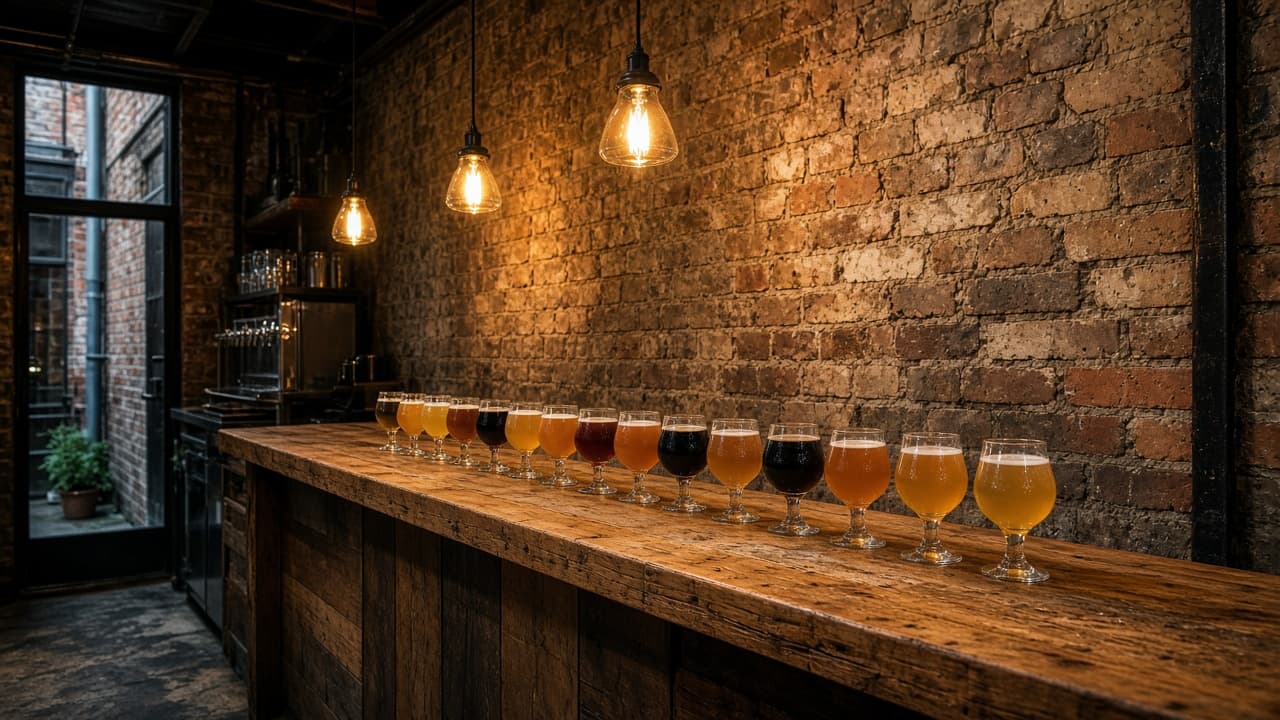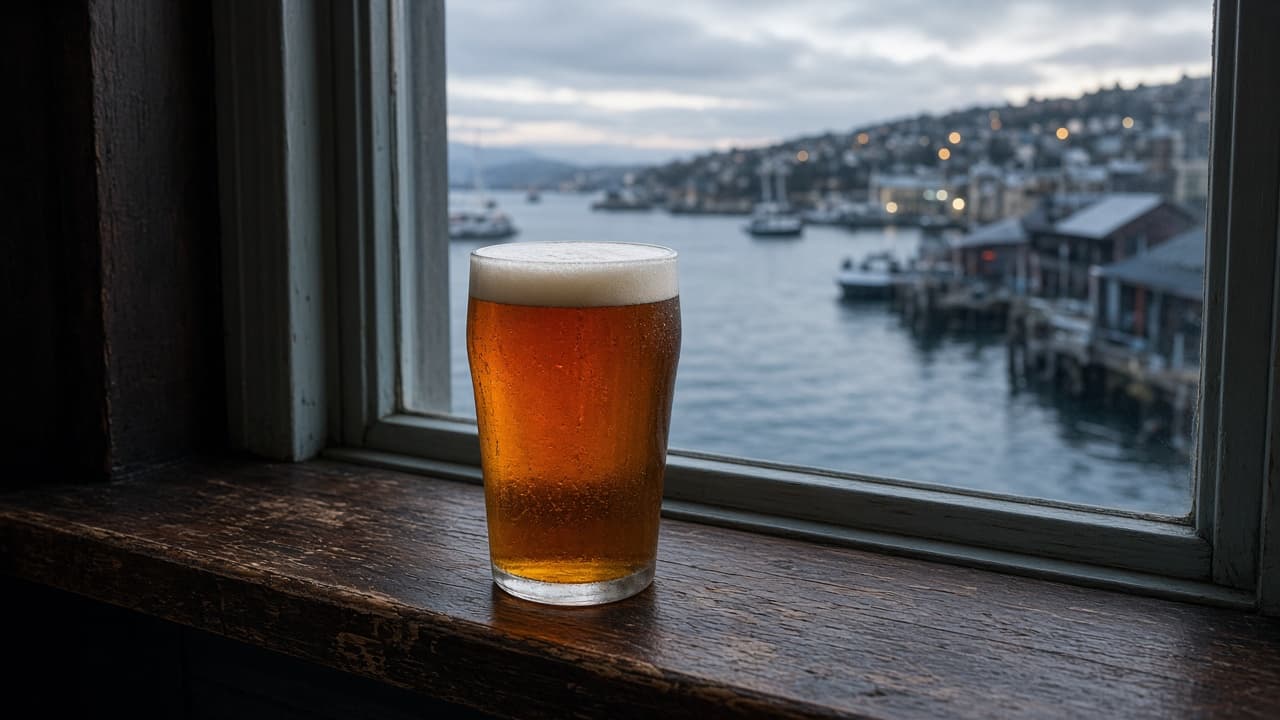
Tasmania is the cool-climate state in this set, which changes the afternoon more than it changes the yeast. You can linger over an amber pint on a Hobart waterfront without the Queensland argument for shade cloth. This hub starts in Hobart, then treats regional cellar days as one-corridor drives. It will not invent a “best brewery in Tasmania” cup or a live ferry timetable.
Hobart as a waterfront walk
Salamanca, the docks, and the inner-Hobart streets already hold pubs and taprooms a visitor can do on foot. Winter wind off the Derwent is a coat. Summer still exists; it is not Brisbane. Name the room, confirm the board, read the style. A pint here is a serve. Tasting is still four notes.
Specialist shops in the inner suburbs are how you take ale and a dark stout home to a rented kitchen. That is the bottle-shop job on the parent venues table. We will not rank those shops.
Salamanca-weekend crowds are a Saturday fact. Confirm hours. Do not treat a market day as a reason this site invented a ranking.
Regional days without an island-wide trail
The Huon, the Coal River, the north around Launceston — each can hold a licensed room beside cider and wine. Pick one. The island looks small on a map and is not small after two paddles on wet roads. A designated driver is not optional theatre. Confirm hours; some regional rooms close earlier than a mainland Friday.
Island hop growing is agriculture that shows up on mainland tap badges. It is not a trophy for a named Hobart pub. Open the hops glossary if you want the plant, not a medal.
This rebuild’s long travel essays are Hunter, Yarra, and Margaret River. Tasmania stays a state venue hub because the first booking is often a flight or the Spirit of Tasmania, not a one-hour freeway.
How Tasmania sits beside Victoria and Western Australia
Victoria is the usual mainland jump: Melbourne venues plus a Yarra hour. Western Australia is the other wet-winter verandah culture, three hours from Perth instead of a strait crossing. New South Wales heat and Queensland humidity are the contrast, not the competition.
Responsible service and official maps
Eighteen or over. RSA. Wet roads, wildlife at dusk, and a designated driver. alcohol.gov.au, DrinkWise, Discover Tasmania. The FAQ holds the short answers.
Ferries, flights, and the first night in Hobart
The Spirit of Tasmania and the flights from Melbourne or Sydney are logistics, not beer scores. A late arrival plus three waterfront rooms is how a visitor writes a bad review of their own planning. Sleep. Walk Salamanca or the docks the next day. Confirm the kitchen. Order one pint and a tasting note if you care about the glass.
If you have a second day and a dry driver, pick one regional corridor — Huon, Coal River, or the north — not all three. Distances look short until fog, logging trucks, and wildlife at dusk show up. Winter daylight is shorter than a mainland Friday. Start earlier than you would in Brisbane.
Hop agriculture on the island is real and shows up in mainland marketing. It does not make a Hobart pub “number one.” If you want the plant, open Hops. If you want a roast beer because the wind is up, open stout. Climate is a preference, not a trophy.
Cider rooms sit beside beer on some regional roads. Treat cider as another licensed pour with an ABV, not as a free pass on the driving rule. Official visitor geography: Discover Tasmania.
MONA-day crowds and cruise-ship Saturdays change waterfront rooms. Confirm. Do not invent a “best Hobart tap” because a ship is in. If you are crossing from Melbourne, the Victoria hub is Friday and Hobart is Saturday — two states, two sleeps, not one crawl.
Specialist shops exist for the rented kitchen. Take ale and a stout home. Write the note. The island is not a reason to skip lager if that is what you actually like.
Winter southerlies make outdoor tables a confirmation, not a default. Summer still exists; pack a layer either way. The Derwent wind is weather, not a ranking.
A lunch-hour Hobart plan is one waterfront room and a walk. That is enough. Save a regional corridor for a day with a dry driver and daylight. Confirm kitchens. Read ABV before a second pint.
Sibling states: Victoria as the usual mainland jump, Western Australia as the other wet-winter verandah culture. Parent: venues.
How to use this state hub
Walk Hobart or pick one regional corridor. Open a style that matches the weather you actually packed for. Do not treat the island as a weekend trophy run.
This is beerguide.com.au. Tasmanian geography. No invented cellar cups.
<!-- pad-final -->
Salamanca weather and the second pint
Hobart’s waterfront can look like a postcard and still be a wind tunnel. A second pint of stout makes sense when the Derwent is up; a second pale lager makes sense when the sun actually stays. Neither sentence is a ranking of rooms. Write the tasting note and keep the walk to one precinct if the weather turns.
If you are meeting a ferry timetable, treat the last pour as a clock, not a dare. The Spirit and the airport buses do not care that you found a fourth tap handle. Official visitor geography stays with Discover Tasmania. Sibling walking cities are Melbourne on the Victoria hub and Fremantle on the WA hub.
Island hop talk belongs on Hops and the harvest article under articles. A Hobart public bar that pours a mainland lager is still doing a useful job on a cold night. Ask the family. Read ABV. Be 18 or over.