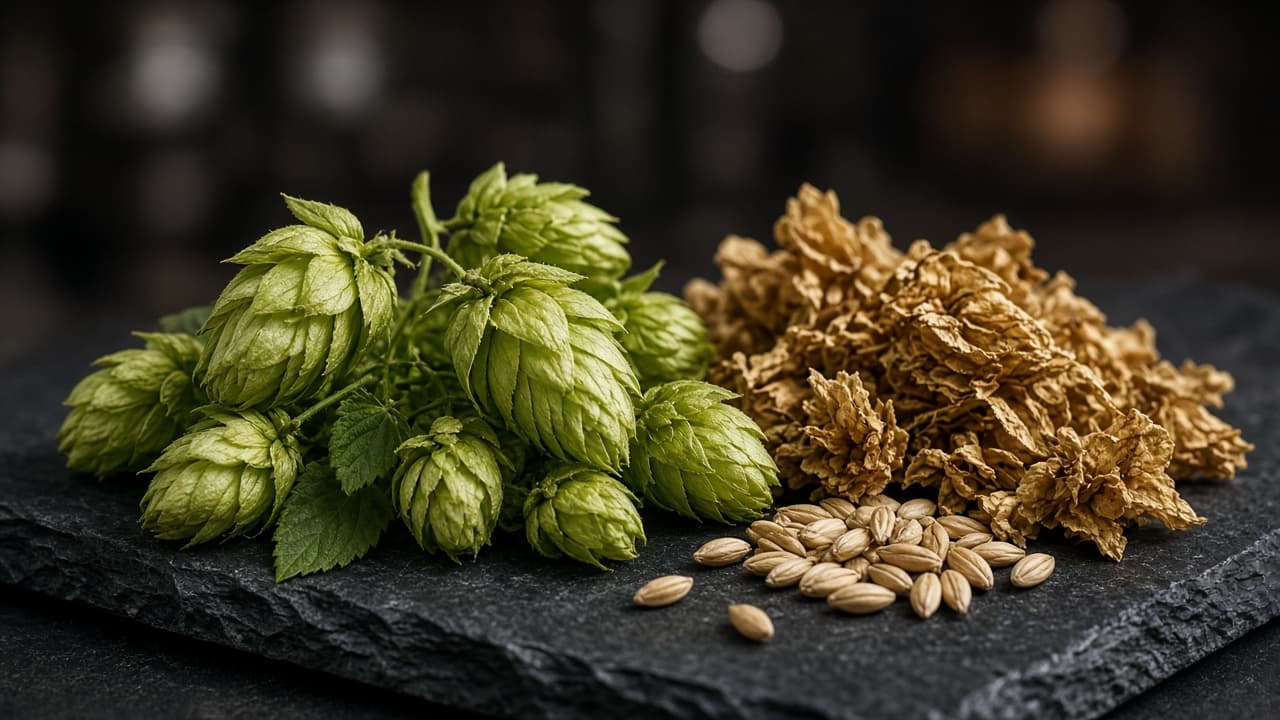
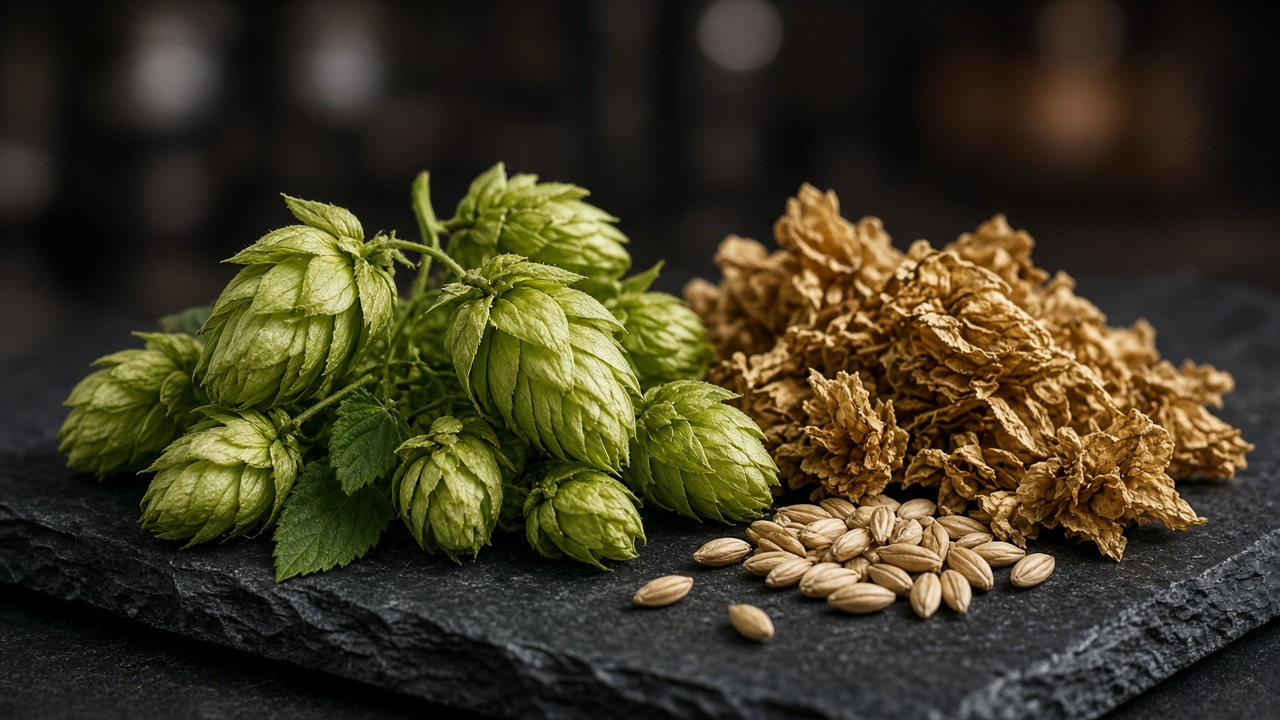
Hops matter because they are the main reason modern beer is not simply fermented malt tea. The plant is Humulus lupulus. The useful parts for brewers are the cones — strobiles — packed with lupulin: alpha acids that isomerise in the boil to make bitterness, and essential oils that become aroma. Hops also carry polyphenols and a mild antimicrobial effect that helped beer travel before refrigeration. The heritage path /beer-glossary/Hops/ still answers the question people type: why do hops matter?
Bitterness, flavour, aroma — three timings
Early kettle additions isomerise more alpha acid and contribute more IBU. Late boil additions keep more oil. Whirlpool and dry hopping push aroma further. An Australian IPA that smells like passionfruit or pine is usually a hop-oil story. A Czech-leaning pilsner that snaps clean is often a kettle-hop story. A stout may use hops only as a balancing bitter so roast can lead.
This site will not invent IBU or oil percentages for a named commercial beer. If a brewery prints varieties on the badge — Galaxy, Ella, Vic Secret, or an imported name — that is their claim. Crop year changes the lot. See Australian hop harvest.
Why they are not the whole beer
Barley malt builds wort. Yeast builds ethanol and esters. Water and process decide whether the hop note is bright or muddy. A poorly stored hop — warm, oxidised — smells like cheese or onion. Light-struck beer smells skunky because light plus hop compounds create a thiol. Hops matter, and handling them matters.
Tasting writes aroma first on a hop-forward glass. Read ABV before a second IPA. Official harm reduction: alcohol.gov.au.
Australian growing and the tap
Victoria’s alpine valleys and Tasmanian farms supply a serious hop industry. Breweries also import American, European, and New Zealand lots. A Sydney inner-west board that lists three varieties is not automatically better than a Brisbane lager that lists none. Intention and freshness decide.
Homebrew basics covers a rolling boil and late additions. Store hops cold. Sanitize when you dry hop. Legal limits apply.
Food labelling will not require a hop essay. FSANZ still governs claims. This is beerguide.com.au. Eighteen and over. No invented hop trophies.
Why the cone still organises an Australian tap list
Hops matter because they bitter, flavour, aromatise, and slightly stabilise beer. Early kettle charges build bitterness. Late and dry hops build the nose. Malt and yeast still do the rest. A sad, warm hop smells like cheese. A light-struck beer smells skunky. Neither is the variety’s fault.
Victoria and Tasmania grow distinctive lots. Breweries also import. A board that lists three names is not automatically better than a lager that lists none. We will not invent IBU for a named brand. Australian hop harvest is the seasonal note.
Cite /beer-glossary/Hops/. Tasting writes aroma first on a hop-forward glass. Read ABV. This is beerguide.com.au. Eighteen and over.
If you only remember one sentence: hops are why modern beer is not simply fermented malt tea — and handling them still matters.
Variety names are not a scoring system
Galaxy, Ella, Vic Secret, and imported names are marketing and agriculture. Crop year changes the lot. Storage changes the lot. Dry hopping changes what you smell. Kettle time changes what you taste as bitter. We will not invent IBU for a named can.
Cite /beer-glossary/Hops/. Australian hop harvest. Tasting. This is beerguide.com.au.
If the board lists hops and the glass smells like cheese, the hops are old. If it smells skunky, check the light.
Cold storage is part of the recipe
A warm pantry turns bright hops toward cheese. Freeze what you will not use this month. Dry hopping with tired hops is a waste. Australian hop harvest is late summer into early autumn. This is beerguide.com.au. We will not invent IBU for a named brand.
First-wort hopping
Some brewers add hops as first wort runs into the kettle. It is another timing, not a score. We will not invent IBU. This is beerguide.com.au. Bitter is still the drinker word.