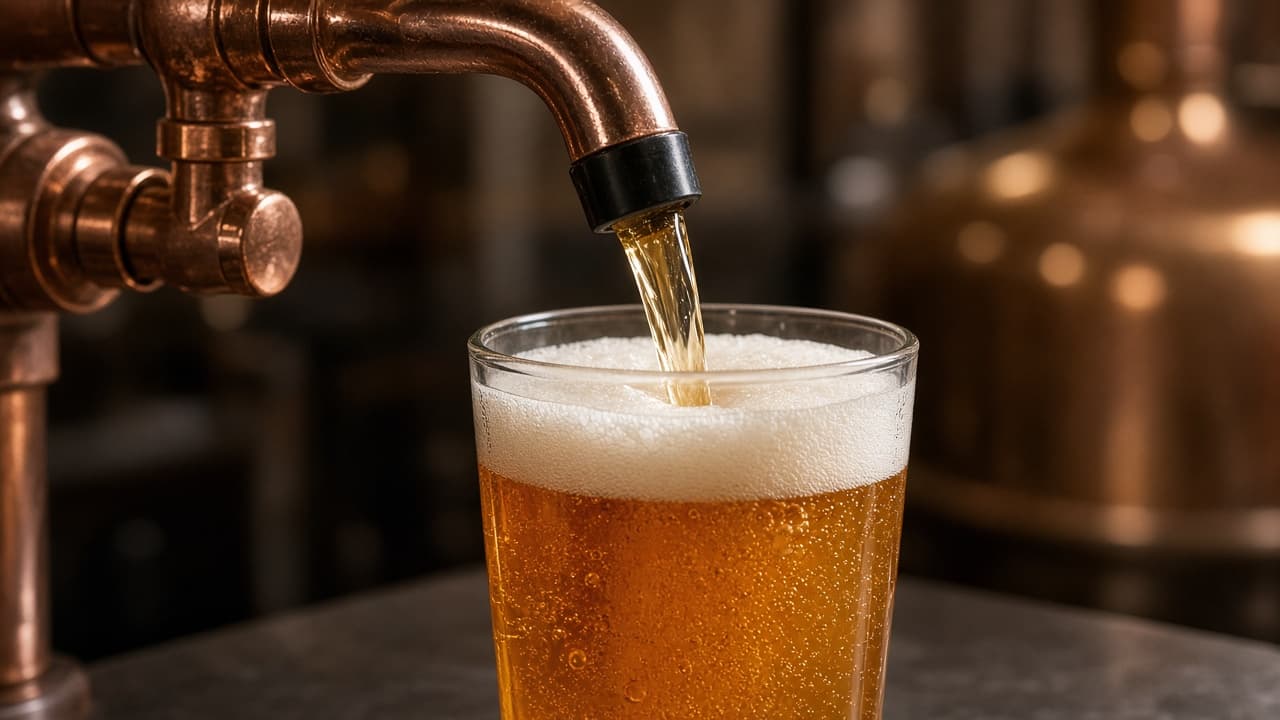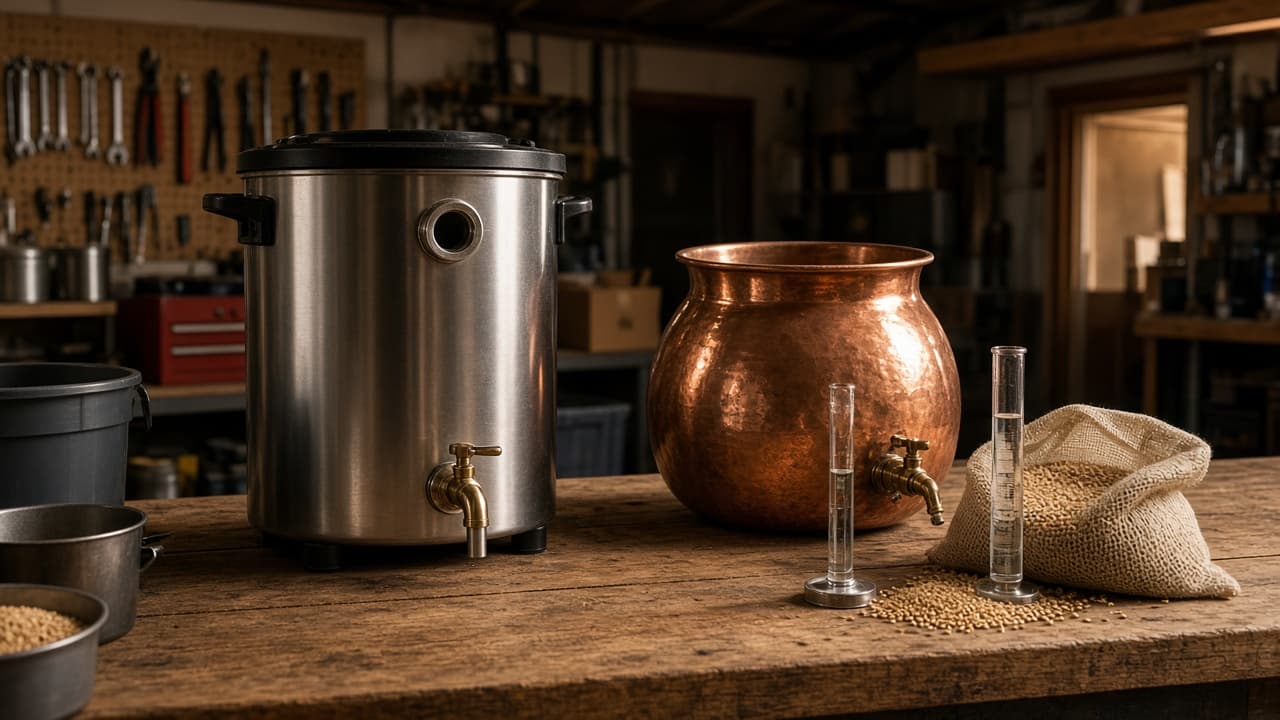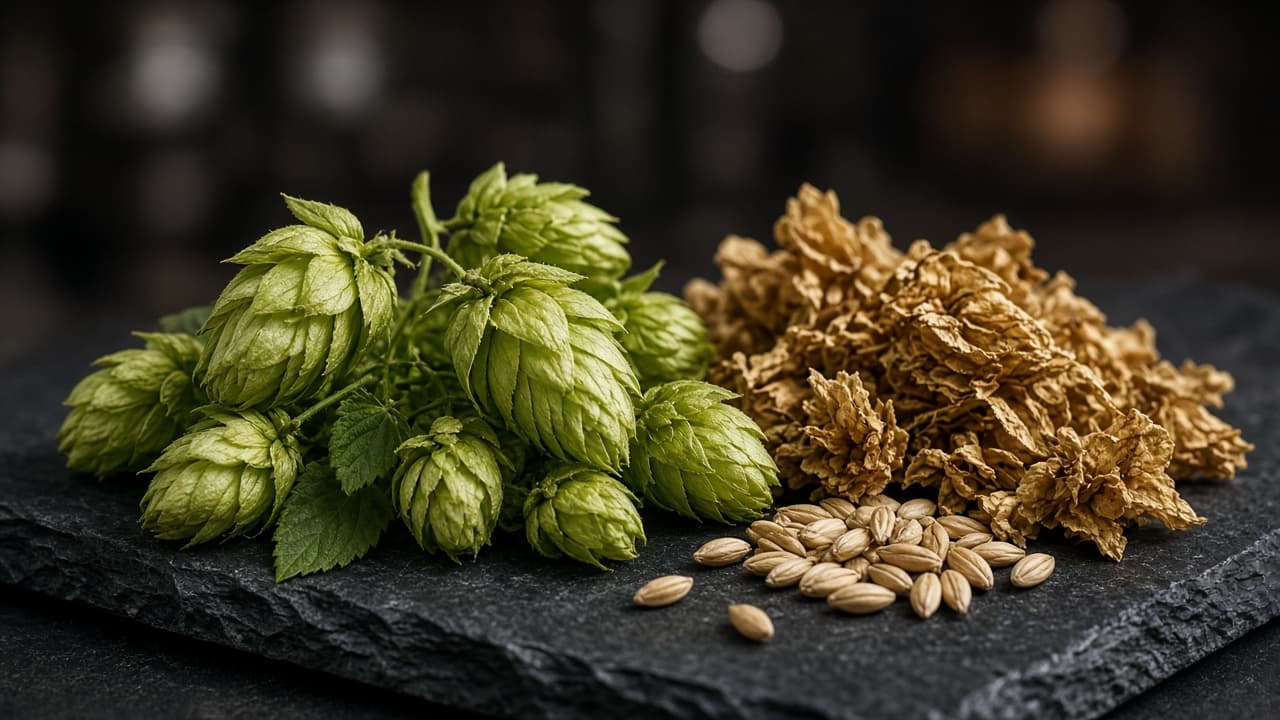
Wort is the sweet intermediate. You mash malted barley — and any adjuncts — in a mash tun. You lauter. You boil, usually with hops. You chill. Until yeast is pitched, the liquid is wort: fermentable and residual sugars, amino acids, hop compounds, minerals, and water. The heritage path /beer-glossary/Wort/ still answers the search: what is wort?
Hot side, then danger
The boil sanitises the wort and isomerises hop resins. Once you chill, the liquid is a banquet for anything that lands in it. Sanitize the fermenter. Pitch enough yeast. Keep the rest anaerobic. That is how wort becomes beer instead of a bacterial experiment.
Original gravity describes wort strength. Final gravity describes beer after fermentation. ABV is the drinker’s number on an Australian label.
What drinkers never say
You will not order “a wort” in a Newcastle public bar. You will drink the fermented result. Brewers still talk wort when they mean pre-ferment. Tasting a beer cannot reconstruct the wort exactly, but a thin pale lager and a lush stout started as different worts.
This site will not invent a gravity or hop-stand temperature for a named commercial wort. Homebrew basics is the walking tour. Legal limits apply. Official food law: FSANZ. Harm reduction: alcohol.gov.au. This is beerguide.com.au. Eighteen and over. No invented kettle scores.
Sweet, unfermented, and perishable once it cools
Wort is the answer to “what do you ferment?” You mash, you lauter, you boil with hops, you chill. Until yeast is pitched, the liquid is wort. Original gravity is its strength. After fermentation we call it beer and we talk final gravity and ABV.
Cold wort is perishable. Sanitize the fermenter. Pitch enough yeast. Keep the rest anaerobic. That is how wort becomes beer instead of a bacterial experiment.
You will not order wort in a public bar. Brewers still say the word when they mean pre-ferment. This site will not invent a gravity or hop-stand temperature for a named commercial wort. Homebrew basics is the walking tour.
Cite /beer-glossary/Wort/. Official food law: FSANZ. This is beerguide.com.au. Eighteen and over.
If someone offers you “non-alcoholic wort” as a wellness drink, remember it is malt tea, not a beer style, and not medical advice.
Between grain and glass there is a sweet liquid with a short safe life
Wort is perishable the moment it is cool and unsanitised. That is why commercial breweries chill in a closed heat exchanger and send wort straight to a clean tank. Homebrewers who leave a kettle of cooled wort under a tea towel overnight are inviting bacterial visitors. Pitch the same day you chill when you can.
The boil concentrates wort, drives off some volatiles, isomerises hops, and reduces microbes. Trub drops. Then the chiller. Then yeast. Then we stop saying wort and start saying beer. Original gravity is the wort’s strength. ABV is the beer’s.
Tasting wort is a brewer’s habit — sweet, grainy, bitter from the kettle. It is not a public-bar order. We will not invent a commercial wort recipe.
Cite /beer-glossary/Wort/. Homebrew basics. Official food law: FSANZ. This is beerguide.com.au.
If the wort smells sour before you pitch, do not “see what happens” unless you intended a sour. Dumping a bad wort is cheaper than packaging a bad beer.
Chill the same day you boil
Cool wort is food for anything. Pitch the day you chill. Sanitize the fermenter. Original gravity describes wort; beer comes after. This is beerguide.com.au. If it smells sour before the pitch, you already have a problem.
No-chill is a method
Some Australian homebrewers no-chill in a cube. It changes hop timing and requires a plan. It is not an excuse for an open pot overnight. This is beerguide.com.au. Pitch when it is actually cool enough.
One more cellar note
A refractometer drop of hot wort is faster than a hydrometer jar. Still chill before you pitch. This is beerguide.com.au.