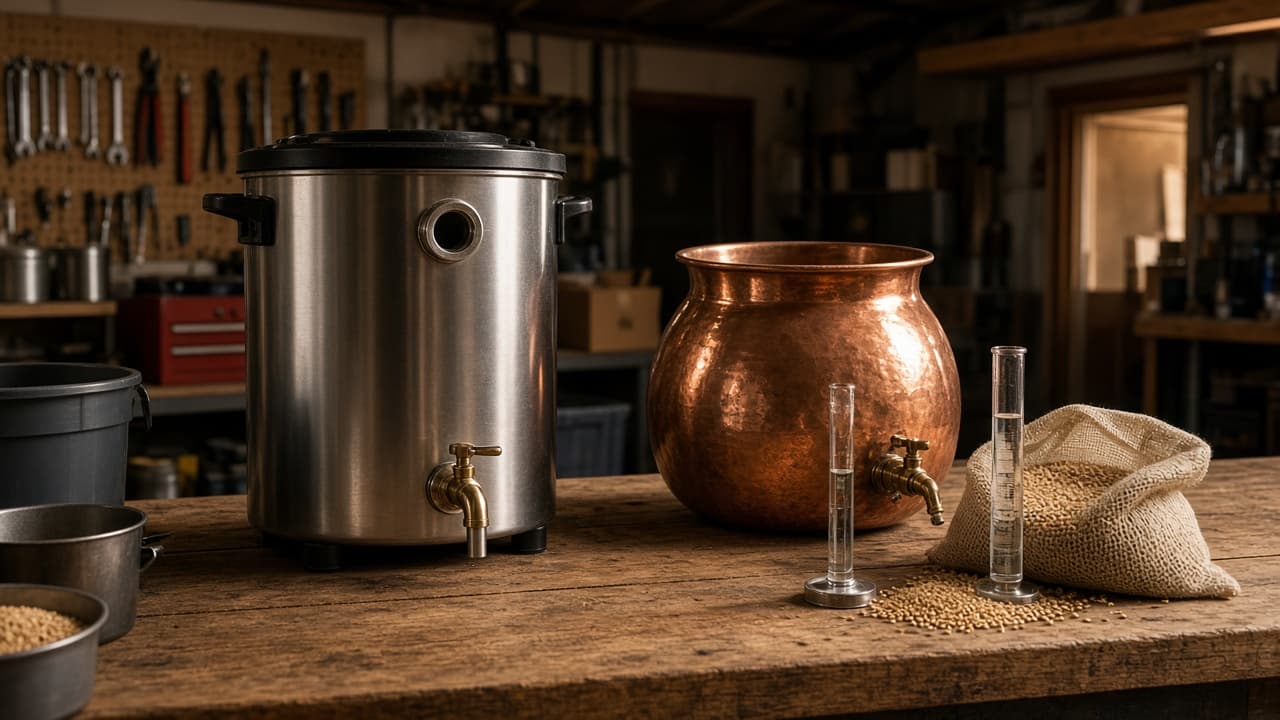
Homebrew basics is the walking tour that sits beside the heritage glossary. The old directory listed kettle words because Australian clubs used this site. We still do. Legal home production has quantity and sale limits that differ by state. You may not turn a garage into an unlicensed brewery. Check current rules before you treat a hobby as a factory.
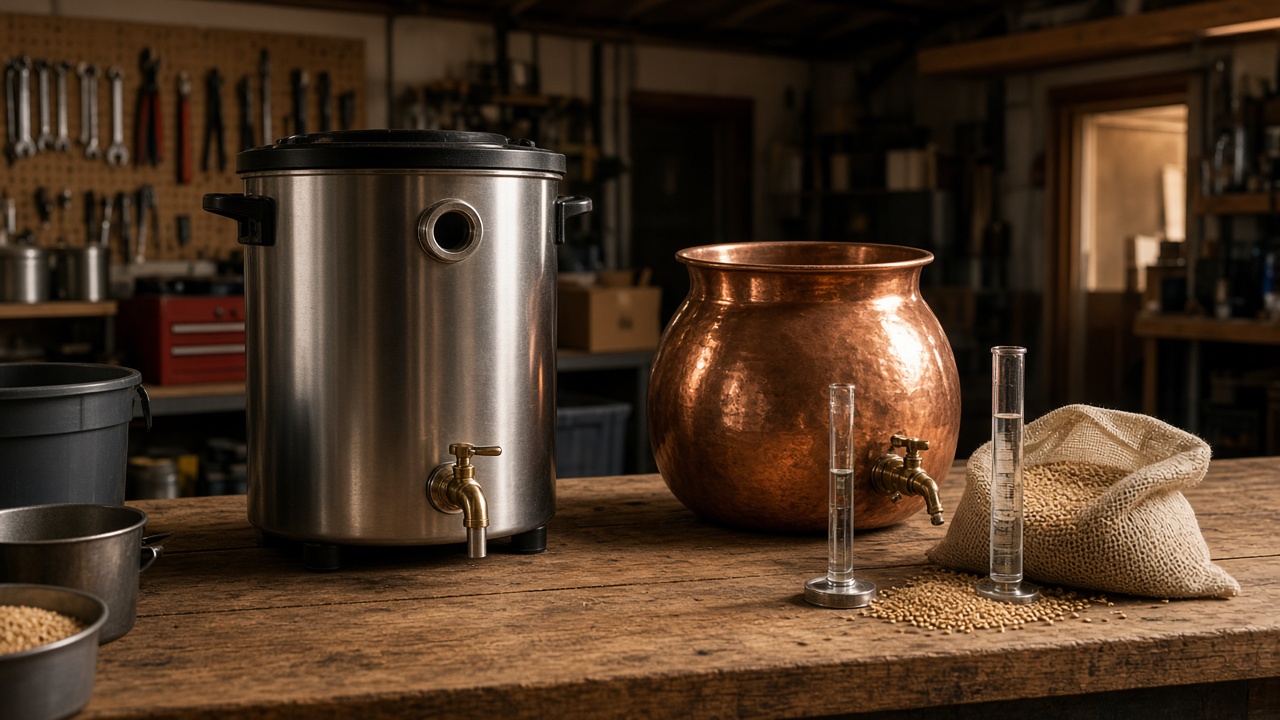
Clean, then sanitise
Sanitize follows cleaning. Soil blocks sanitiser. Everything that touches chilled wort or beer needs the cold-side step: fermenter, thief, bottling wand, keg posts. The boil pasteurises wort. After the chill, the liquid is a banquet for bacterial visitors.
Extract or all-grain
Extract kits skip the mash tun and still make beer. All-grain mashes malted barley — and any adjuncts — then you lauter. Acid rest and decoction are optional extras on modern malt. Neither path is a trophy.
Boil, hop, chill, pitch
Boil to isomerise hops and to reduce microbes. Leave trub behind. Chill. Give a measured aerobic dose. Pitch enough healthy yeast. Then the work is anaerobic fermentation.
Gravity, then patience
Original gravity describes wort. Final gravity describes beer. A hydrometer twice, two days apart, is the adult test. Attenuation is the percentage story. Primary fermentation makes most of the ABV. Conditioning mops up diacetyl and acetaldehyde. Racking to a secondary is optional and often risky.
Package
Bulk priming and priming sugar make bottle-conditioned carbonation. Force-gassing a keg is also valid. Store dark to avoid light-struck beer. Tasting your own beer uses the same four-part note as a taproom.
Official food law: FSANZ. Harm reduction: alcohol.gov.au. This is beerguide.com.au. Eighteen and over. No invented mash scores.
A first all-grain Saturday, without folklore
Buy temperature control before a second mill. Sanitize the day before so you are not mixing chemicals while wort chills. Weigh barley. Dough in without flour balls. Hold the mash tun. Lauter without stripping tea. Boil. Add hops on a clock. Chill. Pitch. Close. Walk away.
On day two, do not open the lid for a photograph. On day seven, take final gravity. Condition. Bulk prime if you bottle. Store dark.
Extract brewers skip the mash and still learn fermentation, the harder half. Neither path is a trophy. Legal limits apply. You may not sell the beer. Official food law: FSANZ.
Tasting your own beer is how the hobby improves. Write the four-part note. Then change one variable next time. This is beerguide.com.au. Eighteen and over.
If a batch fails, dump it. Do not gift a bacterial experiment. Friends remember.
Safety, neighbours, and the law
Boiling twenty litres of wort is a scald hazard. Kids and pets out of the room. Electrics away from wet floors. Fermenters need a place that will not cook in a Queensland afternoon. Bottles need a plastic tub if you distrust your priming maths.
Tell neighbours if you will be boiling hops outdoors. The smell travels. You are still not a brewery. You may not sell. Check council rules if you start hosting club days.
Tasting your beer is how you know whether to change the mash or the pitch. The glossary is the dictionary for every sentence in this walking tour. This is beerguide.com.au. Eighteen and over. Official harm reduction: alcohol.gov.au.
If you outgrow the shed and want to sell, that is a licensed manufacturing conversation this editorial site will not run for you.
Club nights are not factories
A club night that bottles ten ales is still hobby scale. Do not sell the bottles. Check state limits. Sanitize the wand. This is beerguide.com.au. Eighteen and over.
Extract kits still count
You can learn fermentation, sanitation, and tasting without a mash tun. Buy the fridge first. This is beerguide.com.au. Legal limits apply. You may not sell the beer. Official harm reduction: alcohol.gov.au.