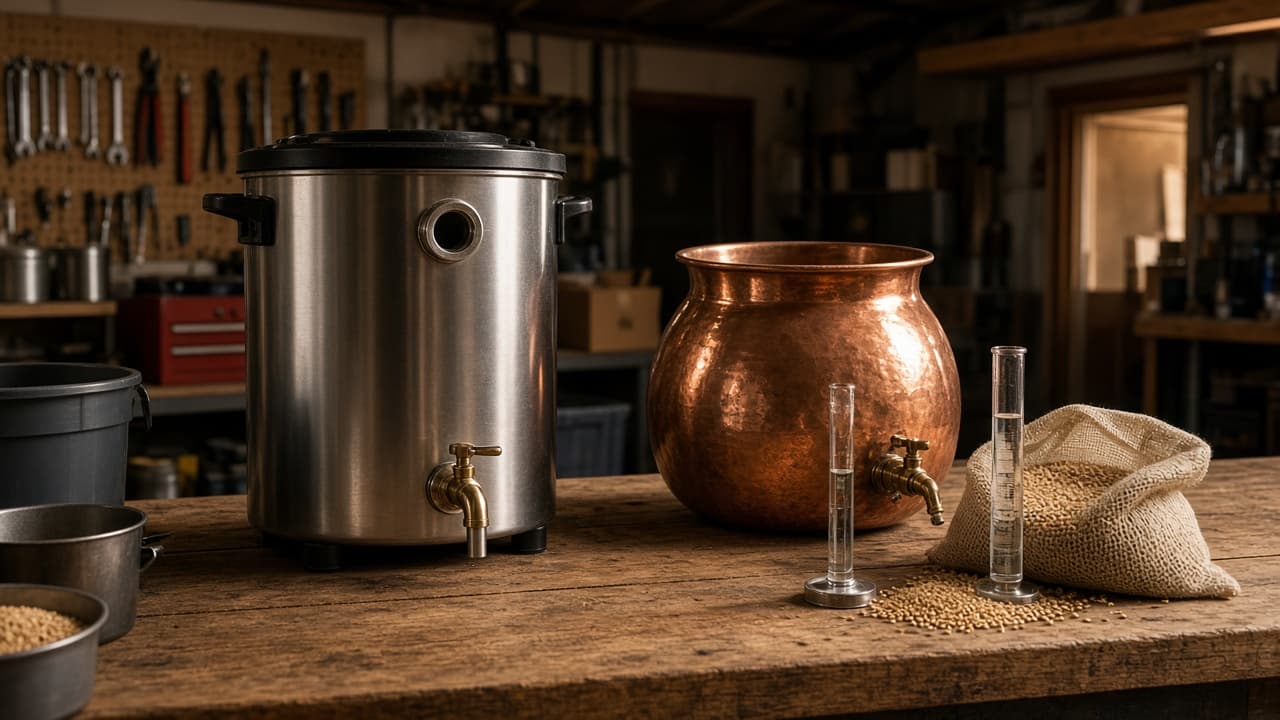
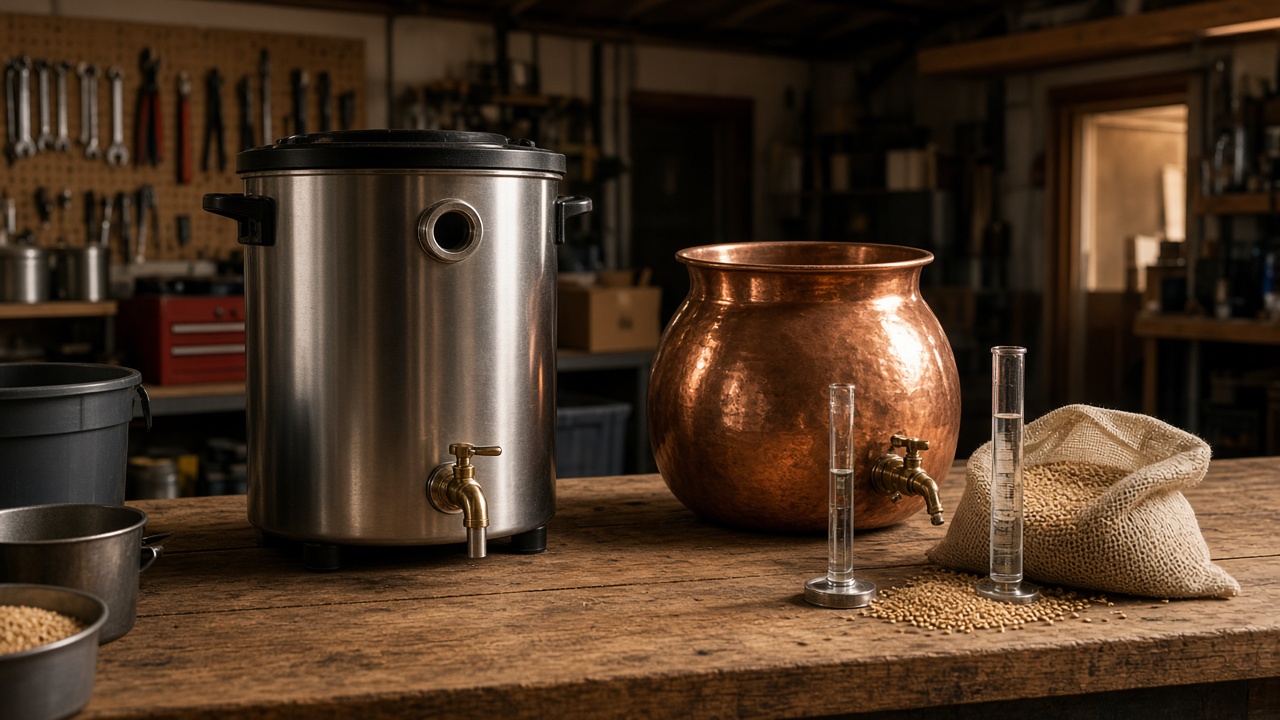
A hydrometer is a sealed glass spindle with a weighted bulb and a scale. It floats higher in dense wort and lower in drier beer. The number it shows is specific gravity (or, on some scales, Plato). Brewers take original gravity before pitching and final gravity when fermentation has stopped. The pair estimates attenuation and ABV. The heritage path is /beer-glossary/Hydrometer/.
How to read it without lying to yourself
Use a tall jar. Spin out bubbles. Read at eye level. Correct for temperature; a hydrometer calibrated at 20 °C will lie in a 40 °C mash sample. Sanitize anything that will touch beer after the boil. Do not return a dirty sample to the fermenter if you can avoid it.
A refractometer uses a drop of wort and is faster on the hot side. Alcohol changes its beer reading. Homebrewers who trust an uncorrected refractometer FG bottle too early. See bulk priming.
What a public bar will never show you
You will not see a hydrometer on a Sydney tap badge. You will see ABV. Commercial labs use density meters. This site will not invent an OG/FG pair for a named Australian pale ale. Tasting can still describe dryness.
Homebrew basics puts the tool in the chill-and-pitch chapter. Legal limits apply. Official labels: FSANZ. This is beerguide.com.au. No invented gravity scores.
A jar, a spindle, and two honest numbers
A hydrometer will not make beer. It will stop you lying to yourself about whether fermentation is finished. Cool the sample. Read the meniscus. Correct for temperature. Sanitize the thief. Repeat tomorrow. Original gravity describes wort. Final gravity describes beer. The drop estimates attenuation and ABV. A refractometer is faster on hot wort and needs a correction once alcohol is present.
You will not see a hydrometer on a Sydney tap badge. Commercial labs use density meters. This site will not invent an OG/FG pair for a named pale ale. Tasting can still describe dryness.
Homebrew basics puts the tool next to the chill. Bottle on one hopeful glance and you prime a bomb. Legal limits apply. Cite /beer-glossary/Hydrometer/. This is beerguide.com.au.
If the spindle sticks to the glass, you have bubbles or a dirty jar — not a new style.
Calibration, temperature, and a notebook
Hydrometers crack, scale stickers slip, and jars that are too short make you read at an angle. Buy a jar tall enough. Spin the spindle. If you always read high, you will think every beer is unfinished. If you always read low, you will prime too soon. Check the instrument in water at its calibration temperature. It should sit at 1.000, or you need a correction.
A refractometer is a gift on mash day and a trap on packaged day unless you apply an alcohol correction. Many Australian club brewers use both: refractometer for hot wort, hydrometer for final gravity. Neither replaces tasting, but tasting will not tell you whether you may bottle.
You will never see a hydrometer behind a Surry Hills bar. You will see ABV. That number came from density work someone did, or from a laboratory method. We will not invent their worksheet.
Tasting and gravity together teach style. A beer that tastes dry and reads 1.020 is telling you about unfermentables or a stuck ferment — different problems. Homebrew basics wants both notes in the log.
Cite /beer-glossary/Hydrometer/. Legal home production has limits. This is beerguide.com.au. Eighteen and over.
If you drop the glass spindle on tiles, sweep carefully. The replacement is cheaper than a case of grenades bottled on guesswork.
Water check at calibration temperature
If the spindle does not read 1.000 in water, every beer note is offset. Fix the instrument or apply a correction. Then trust final gravity. This is beerguide.com.au. Homebrew basics.
Plato versus SG
Some kits print Plato. Convert before you compare to an SG recipe. Wrong scale is how people think they mashed at 1.012. This is beerguide.com.au. Write the unit in the notebook.
One more cellar note
A cracked spindle that takes on liquid will read wrong forever. Replace it. This is beerguide.com.au. Two days, two readings.