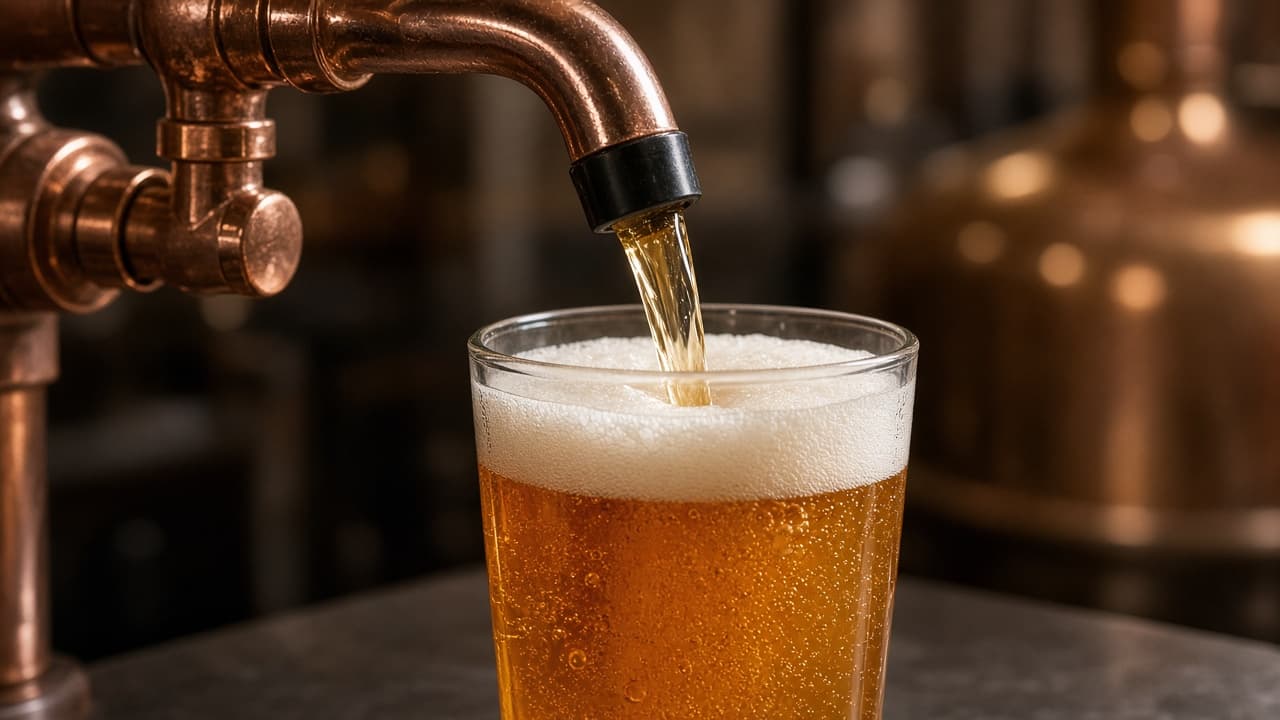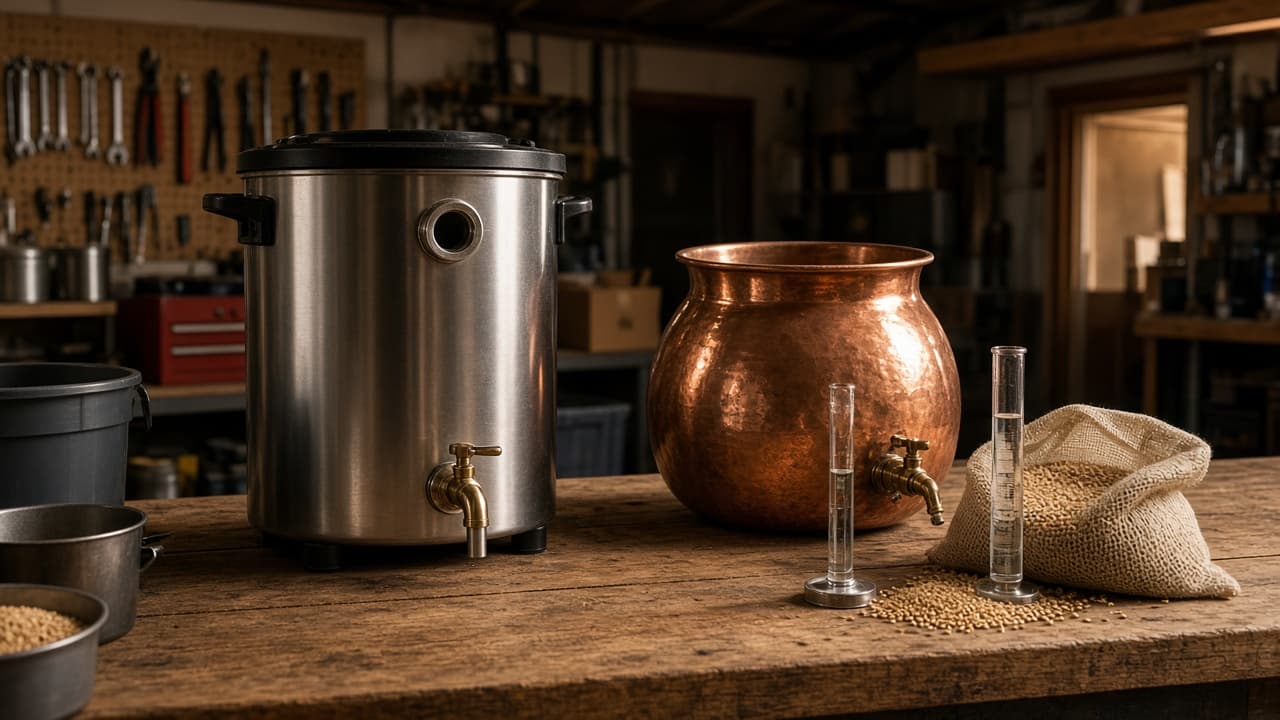
Primary fermentation is the noisy chapter. After pitching, yeast multiplies, then runs an anaerobic conversion of wort sugars. A krausen — a foam of protein, hop, and cells — rises and falls. Gravity drops. Heat evolves. Most of the ABV appears here. The heritage path is /beer-glossary/Primary-Fermentation/.
Ale days, lager weeks
Ale primaries can look “done” in a few days. Lager primaries are cooler and longer. Neither calendar replaces a hydrometer. Final gravity that has not moved is the adult test. Then conditioning mops up diacetyl.
Secondary fermentation is optional. Many beers never leave the primary vessel until package. Racking too early oxidises a pale beer.
Australian summers
A 32 °C laundry is not a cellar. Esters and fusels climb. Homebrew basics says buy temperature control before another gadget. Legal limits apply.
You will not see “primary” on a tap badge. You will taste youth if the beer was rushed. This site will not invent a tank-day figure for a named brewery. Tasting can write “green.” Official harm reduction: alcohol.gov.au. This is beerguide.com.au.
The week you should mostly leave alone
Primary fermentation is where most ethanol appears and where impatient brewers do the most damage. After pitching, there is a lag. Then krausen, heat, and a gravity drop. Then a fall in activity that is not the same thing as “done.” A hydrometer that has not moved for two or three days, plus a beer that is no longer throwing a thick cap, is the adult test. A calendar that says “ales take four days” is folklore.
Ale primaries can look violent and finish looking quiet while yeast still reduces diacetyl. Lager primaries are cooler and longer, then a diacetyl rest, then a cold condition. Australian summers in a laundry or garage push ales into fusel and ester territory they did not order. Temperature control is a better purchase than a second fermenter.
Do not rack the moment krausen falls. Do not add fruit “to help it along” unless you designed a secondary. Do not open the lid to photograph the krausen every hour. Sanitize the thief when you must sample. Homebrew basics is blunt about peeking.
You will not see “primary” on a tap badge in Perth. You will taste youth if a beer was rushed to a festival. This site will not invent a tank-day figure for a named brewery. Tasting can write green apple or butter and then ask whether time would have helped.
Read ABV as a drinker; it is the legal number. Official harm reduction: alcohol.gov.au. Legal home production has limits. Cite /beer-glossary/Primary-Fermentation/. This is beerguide.com.au.
The quiet rule: when in doubt, wait. Final gravity is patient. Your ceiling is not.
Krausen is a sign, not a certificate
A tall krausen looks like success. A fallen krausen looks like the end. Neither replaces gravity. Some beers ferment almost under the surface. Some throw a crust for days after they are done. Hydrometer twice. Then condition.
Cite /beer-glossary/Primary-Fermentation/. Homebrew basics. This is beerguide.com.au.
If you photograph the krausen more than you sanitise the thief, adjust the hobby.
Heat in the bucket is not a heater
Primary fermentation throws heat. A 20-litre ale in a 30 °C Queensland laundry can spike into fusel territory even if the room felt “about right.” Put the fermenter in a water bath. Check gravity, not the airlock. Then condition. Homebrew basics buys temperature control before another gadget. This is beerguide.com.au. Official harm reduction: alcohol.gov.au. If the krausen stains the lid, you overfilled the vessel — next time leave headspace.
Underfilling invites oxidation
A two-litre headspace in a pale ale is a lot of air. Size the vessel. This is beerguide.com.au. Aerobic exposure after pitch is the failure mode.
One more cellar note
A heater belt on a lager packet is how you brew an ale by accident. Read the strain. This is beerguide.com.au.
A heater in the same cupboard as a lager ferment is a conflict. Separate the projects. This is beerguide.com.au.